
Weekly Highlights
 Dominica(tied with
  Grenada)30°C86°F Mar 21Coolest
 Martinique20°C68°F Mar 21Windiest
 Barbados48 km/h30 mph Mar 17Wettest
 Antigua and Barbuda21.06 mm0.83 in (Mar 22, 11.15 mm0.44 in)Driest
 Saint Martin1.07 mm0.04 in
Based on data collected across 18 Eastern Caribbean islands over the past 7 days.
This Week in the Eastern Caribbean
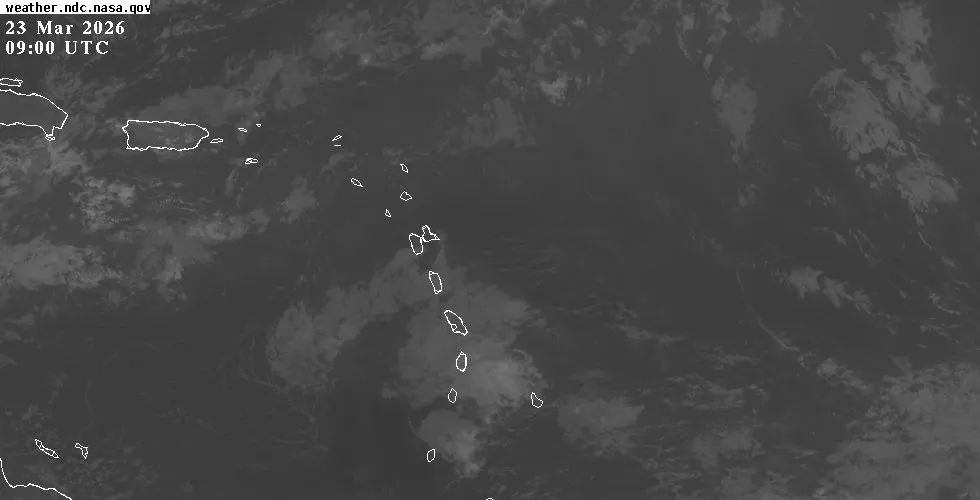
The Eastern Caribbean entered a transitional weather pattern this past week, with conditions reflecting the seasonal shift between dry and wet periods. Temperatures ranged from 20°C68°F in the cooler windward islands to 30°C87°F in the south, while average humidity held steady at 84%, creating warm and somewhat muggy conditions across the region. Winds remained light, with peak gusts around 48 km/h30 mph observed in Barbados, though most areas experienced gentler southeasterly breezes.
Rainfall was unevenly distributed, with some islands receiving light precipitation and others staying relatively dry. Pressure remained stable at around 1012 mb, and no tropical systems posed any threat to the basin.
This Week's Outlook
A weak trough system and its associated moisture will continue to dominate conditions across the Eastern Caribbean through the coming days. The forecast calls for occasional light rain and brief showers to develop periodically across most islands, from the British Virgin Islands southward to Trinidad and Tobago. These showers are expected to be scattered and brief rather than prolonged, typical of the early transition season when atmospheric instability increases but strong weather systems remain absent.
Winds will remain light and variable, with gusts generally ranging from 11 to 26 km/h7 to 16 mph, becoming even lighter at times. Sea conditions will remain relatively calm, with wave heights averaging 1 to 1.8 metres3 to 6 feet, making this a favorable period for maritime activities despite the intermittent rain showers.
Residents and visitors should expect the typical pattern of the transition season: warm days interrupted by afternoon or evening showers that clear quickly. No significant weather disruptions are anticipated, and conditions remain well within normal parameters. The Atlantic basin continues to show no signs of tropical cyclone development.
Looking Ahead
This transitional period represents a natural shift in the region's climate cycle, characterized by increasing moisture and atmospheric instability but without the severe weather risks associated with the peak hurricane season. For detailed island-by-island conditions, wind speeds, and precipitation forecasts, visit the weather page. The outlook page provides extended forecasts and trend analysis.
To track real-time radar and satellite imagery for your location, check the interactive map.