

July 2026 has brought little tropical activity to the Atlantic basin so far. With only one named storm recorded to date, the 2026 season is running significantly quieter than the historical average. While the calendar officially entered peak Atlantic hurricane season months ago, the atmospheric patterns now taking shape suggest that the truly active period may be delayed or markedly suppressed compared to typical years.
Season Snapshot
Atlantic season runs June 1 to November 30. Storm counts for 2026 from the Dewedda.com tracking database; season averages from NOAA 1991-2020 climatology. Track activity live on the interactive map.
Season-to-Date Summary
Through early July, the 2026 Atlantic hurricane season has produced only one named storm. By this point in an average season (based on NOAA's 1991-2020 climatology), approximately 3 named storms would typically have formed, along with 1 hurricane. No hurricanes have developed so far this year.
The next Atlantic storm names to be used are Bertha, Cristobal, and Dolly. The climatological peak of the Atlantic hurricane season falls on September 10, meaning the most active weeks of tropical cyclone formation historically lie ahead. Many of the storms that will ultimately impact the Caribbean and Atlantic basin have yet to form.
Current Basin Conditions: Suppression Under Development
The National Hurricane Center's latest tropical weather discussion identifies two tropical waves currently tracked in the Atlantic. One is positioned in the far eastern Atlantic along 19 degrees west, while another moves through the western Caribbean near 88 degrees west. Neither shows signs of development into a named storm at present.
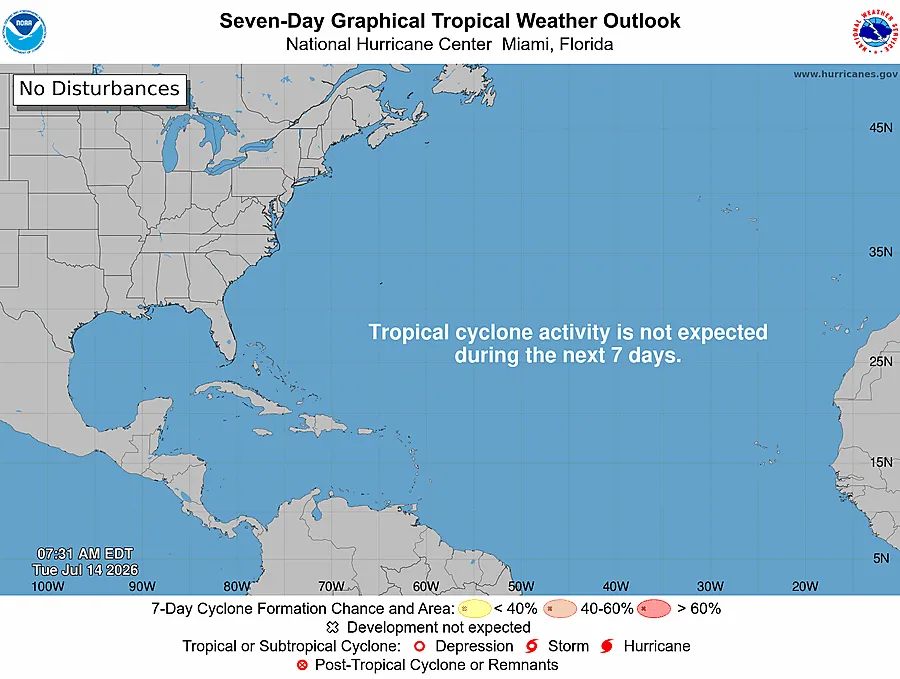
A dominant subtropical ridge is anchoring high pressure across much of the tropical Atlantic, supporting fresh easterly trade winds. Convection, the rising motion needed to fuel tropical development, remains suppressed across most of the basin due to a large plume of Saharan dust combined with mid-latitude dry air aloft. This unfavorable atmospheric setup is a key reason why tropical cyclone formation is not expected during the next seven days, according to the National Hurricane Center's official outlook.
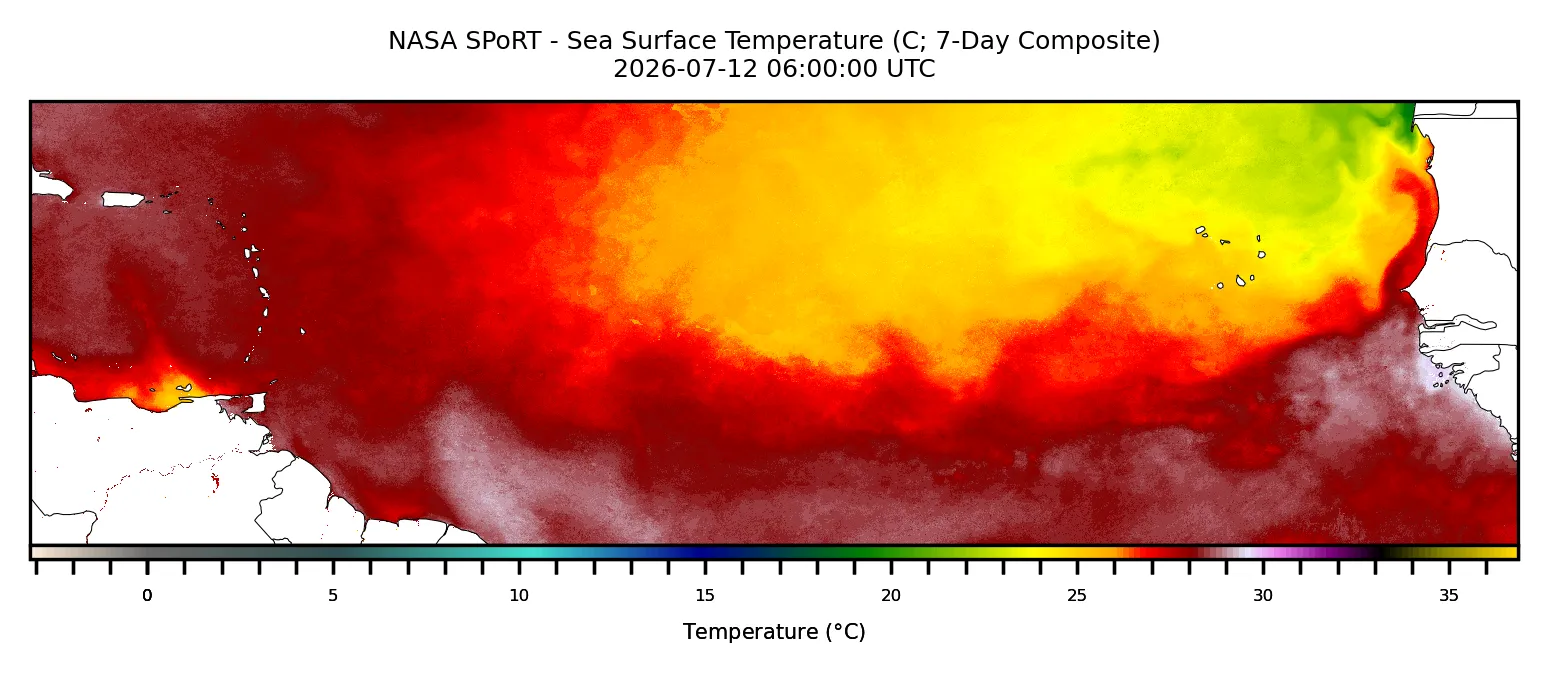
Sea surface temperatures in key development regions show mixed signals. However, the dominant climate feature shaping the 2026 season is the strengthening El Niño in the tropical Pacific. This climate pattern is driving well above-normal levels of vertical wind shear across the tropical Atlantic and Caribbean, according to Colorado State University's latest seasonal forecast released July 8.
Wind shear, the change in wind speed and direction with altitude, is one of the most hostile forces for tropical cyclone development. When shear is strong, it tears apart the organized structure that storms need to survive and intensify.
Forecasting experts note that wind shear over the Caribbean Sea has reached the second highest levels observed for early July on record, underscoring the strength of this suppressing influence during what should be ramping-up months for Atlantic tropical activity.
What Forecasters Are Saying
Colorado State University's July outlook calls for well below-average activity during the 2026 season due to the strong El Niño conditions expected to persist through the peak months of August and September. This forecast carries good skill when tested against historical patterns, according to the CSU team.
NOAA's Climate Prediction Center and National Hurricane Center, which issued their official seasonal outlooks in May, also anticipate a below-normal season driven primarily by the elevated wind shear signal associated with El Niño. The combination of unfavorable upper-level winds and suppressed convection from Saharan dust creates an environment hostile to tropical storm development.
It is important to note that a below-average season forecast does not mean zero activity. Even during historically quiet years, storms can still form and pose significant impacts. The 2023 season, which featured strong El Niño conditions similar to those expected in 2026, produced numerous named storms and hurricanes despite the suppressive conditions.
Eastern Caribbean Perspective
Residents and visitors across the Lesser Antilles arc from the Virgin Islands south to Grenada are currently experiencing typical tropical summer weather patterns. The National Hurricane Center's offshore waters forecasts call for persistent easterly to northeast winds of 19 to 37 km/h12 to 23 mph across the Leeward Islands, Windward Islands, and nearby Atlantic waters through mid-July. Seas are running 1.2 to 2.1 m4 to 7 feet, elevated slightly by the fresh trades but manageable for those accustomed to the season.
The good news for the Eastern Caribbean is that the same conditions suppressing development basin-wide also mean lower odds of tropical systems developing in the immediate vicinity. However, tropical waves continue to move through the Atlantic, and any that do organize into storms would still pose a threat regardless of the seasonal forecast.
What to Do Now
Residents should not interpret a below-average seasonal forecast as a green light to abandon hurricane preparedness. FEMA, the National Hurricane Center, and local emergency management authorities universally stress that it only takes one hurricane to cause disaster, regardless of overall seasonal activity. July is an excellent time to review household emergency plans, stock supplies, and ensure that hurricane shutters, drainage systems, and secure storage for outdoor items are in good working order.
For those planning travel to the Eastern Caribbean during summer and early fall, monitor tropical weather regularly. Check the forecast outlook and tracking map weekly for updates on any developing disturbances. While activity is expected to remain suppressed, individual storms can still form and intensify rapidly when conditions align.
The pattern established in July is likely to persist through August and September, but forecasts can and do change. Stay informed, stay prepared, and use this quieter period to strengthen household and community readiness.